How to Taste Italian Wine Properly: A Step-by-Step Beginner Guide

Home » Blog Rome Wine Tasting » How to Taste Italian Wine Properly: A Step-by-Step Beginner Guide

How to Taste Italian Wine Properly: A Step-by-Step Beginner Guide

How to Taste Italian Wine Properly: A Step-by-Step Beginner Guide

Posted on March 3, 2026
Latest Posts

Italy produces some of the most diverse wines in the world. Yet many travelers and wine lovers still ask:

How do you taste Italian wine properly?

Whether you’re planning an authentic wine tasting experience in Rome or simply want to better understand what’s in your glass, this Italian wine tasting guide will teach you the essential steps.

Learning how to taste wine properly allows you to appreciate structure, balance, and the deep connection between wine and food that defines Italian culture.

Why Italian Wine Is Different

Before learning how to taste Italian wine, it’s important to understand what makes it unique.

Italy has over 500 native grape varieties and 20 wine regions. Unlike many international wines, Italian wines are:

  • Designed for food pairing

  • Naturally higher in acidity

  • Deeply connected to terroir

  • Often produced from indigenous grapes

Italy’s wine classification system (DOC and DOCG) is regulated by official institutions such as the Consorzio Vini d’Italia, ensuring a strong regional identity.

Because of this diversity, knowing how to evaluate acidity, tannins, and structure becomes essential.

How to Truly Enjoy Rome wine tasting

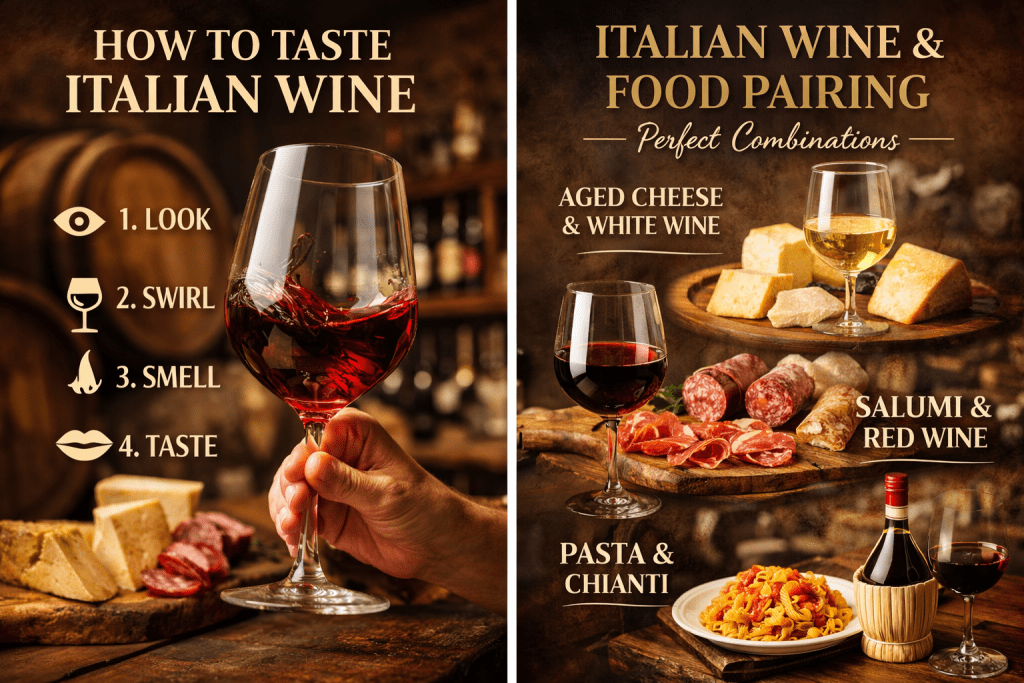
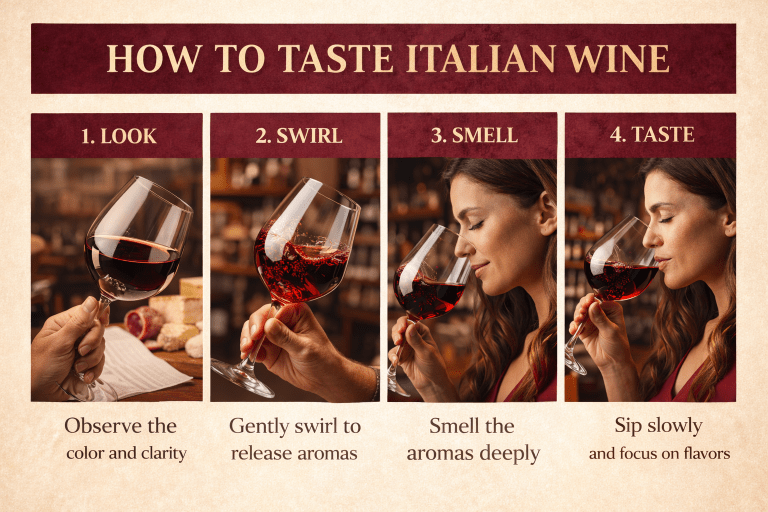
Step-by-step guide showing how to taste Italian wine: look, swirl, smell, and taste in a wine cellar setting.

Step 1: Look at the Wine

The first step in any proper wine tasting is visual evaluation.

Hold your glass against a white surface and observe:

  • Color intensity – Pale or deep?

  • Hue – Ruby, garnet, straw yellow?

  • Clarity – Clear or slightly opaque?

For example:

  • Young Italian reds often show bright ruby tones

  • Aged wines develop brick or garnet hues

  • Mineral white wines may appear pale straw with green reflections

The appearance gives clues about age and structure.

Step 2: Swirl and Smell

If you’re learning how to taste Italian wine for beginners, aroma is key.

Gently swirl the glass to oxygenate the wine. Then inhale slowly.

Look for:

  • Fruit notes (cherry, citrus, apple, plum)

  • Floral hints (violet, white flowers)

  • Herbal tones (sage, Mediterranean herbs)

  • Earthy or mineral nuances

Smell represents a large part of flavor perception. Many Italian wines reveal their character before the first sip.

Step 3: Taste and Evaluate Balance

Take a small sip and let it coat your palate.

Focus on four elements:

Acidity

Italian wines are known for vibrant acidity. Does your mouth water?

Tannins

Do you feel dryness on your gums? This is typical in structured red wines.

Body

Is the wine light, medium, or full-bodied?

Finish

How long do flavors last?

Understanding these factors helps you confidently describe wine flavors without complicated terminology.

How to Pair Italian Wine with Food

One of the most important wine tasting tips for beginners is this:

Never judge Italian wine without food.

Italian wine and food pairing is fundamental. These wines are made for the table.

For example:

  • A structured white enhances creamy pasta

  • A mineral-driven white elevates aged pecorino

  • A bold red softens beautifully with artisanal salumi

Many producers embrace the philosophy of the Slow Food movement, which protects traditional and artisanal food products.

That’s why a curated Italian wine and food experience in Rome can completely transform how you perceive wine.

Common Beginner Mistakes

When exploring how to taste wine properly, avoid:

  • Drinking too quickly

  • Ignoring aroma

  • Focusing only on alcohol content

  • Not pairing wine with food

  • Comparing everything to non-Italian styles

Italian wines prioritize balance and elegance.


What to Expect from a Wine Tasting Experience in Rome

Reading an Italian wine tasting guide is helpful. Experiencing it in a traditional cellar setting is transformative.

A proper tasting often includes:

  • Wines from multiple Italian regions

  • Explanation of native grape varieties

  • Structured tasting guidance

  • Artisanal cheeses and cured meats

  • A relaxed small-group atmosphere

If you’re looking for a small-group wine cellar experience in Rome, you can explore available dates here: Booking Page


Final Thoughts

Learning how to taste Italian wine properly opens a deeper understanding of Italy itself.

From acidity and tannins to food pairing and regional diversity, every glass tells a story.

Approach wine with curiosity and structure — and the experience becomes unforgettable.

FAQ – Beginner Questions About Italian Wine

How do beginners taste Italian wine?

Start by observing color, swirling to release aromas, smelling carefully, and evaluating acidity, tannins, body, and finish.

What is the proper way to taste wine?

The proper way includes visual evaluation, aroma assessment, and structure analysis. Food pairing enhances perception.

Do you need experience for a wine tasting in Rome?

No experience is required. Guided tastings are educational and beginner-friendly.

Contact Form Demo
Buy Gift Voucher

Proceed Booking

Share via
Copy link